The Sacred Act of Rest; The Art of Doing Absolutely Nothing

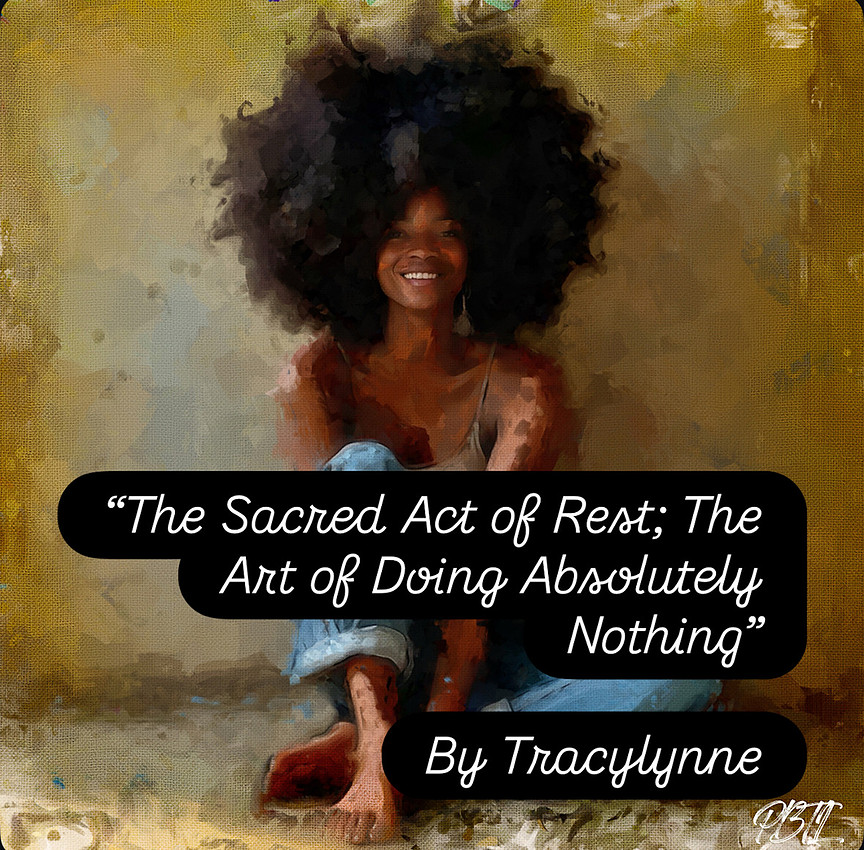

The Radical Power of Doing Nothing
You’ve been sold a lie. Self-care isn’t just about journaling, green smoothies, or sunrise yoga. Real self-care, the kind that actually heals, often looks like doing nothing. And no, I won’t apologize for saying it. Yet, we resist it. Why? Because stillness forces us to confront the uncomfortable truth that we are human, not machines.
We live in a world that worships productivity like a god. If you’re not hustling, optimizing, or achieving, you’re failing. But here’s the brutal truth: your nervous system wasn’t designed for this. Chronic doing is a one-way ticket to burnout, anxiety, and a life that feels like an endless to-do list.
What "Doing Nothing" Actually Means
"Doing nothing” is a calculated refusal to fill every minute with tasks, screens, and inputs. It’s a bold act of restoration and grounding. The research is clear: periods of idleness help recharge your brain, lower stress hormones, and regulate emotions, leading to stronger mental and physical health.
When you allow yourself regular moments, or entire days, without schedules or obligations, you aren’t wasting time, you’re making a direct investment in your long-term resilience. As Dr. Lisa MacLean at Henry Ford Health notes, idleness isn’t neglect. It triggers a chain reaction of benefits: better problem-solving, increased creativity, improved mood, and a higher capacity for kindness.
Guilt. That’s the first thing people feel when they try to do nothing. We’ve been brainwashed into believing our worth is tied to output. But let me be clear: rest is not earned. It is your birthright.
Doing Nothing:
-Lowers cortisol levels (the stress hormone)
-Enhances emotional resilience-
-Replenishes cognitive resources depleted by constant stimulation
Yet, we resist it. Why? Because stillness forces us to confront the uncomfortable truth that we are human, not machines.
The Science Behind Inactivity
Multiple studies link the practice of doing nothing with reduced anxiety and burnout, sharper focus, and superior learning. The Annals of Behavioral Medicine and similar research have consistently shown that mindful rest reduces stress and boosts your immune system. When you don't allow yourself downtime, you inch closer to exhaustion, weakened cognition, and emotional volatility.
Your nervous system shifts out of the constant fight-or-flight adrenaline chase and into a calmer, restorative state when you pause. The physical body repairs itself best in times of rest, with digestion, cell repair, and memory consolidation occurring only during genuine downtime. Regular inactivity is required, not optional, for optimum wellbeing.
Doing Nothing as a Regular Ritual
Doing nothing must be scheduled and repeated. Like any form of self-care, it requires ongoing commitment to become part of your routine. It’s not about an annual vacation or rare break, but about daily, weekly moments where you permit yourself to pause. This is non-negotiable maintenance for your emotional hygiene and physiological health.
-Schedule it. Block time for "nothing" like you would a meeting. No, scrolling doesn’t count.
- Take five minutes daily to sit silently with no agenda.
- Protect quiet afternoons or evenings for true rest, no phone, no distraction.
- Let boredom rise and pass, insight, clarity, and healing often surface in the gaps you’ve been avoiding.
-Reframe laziness. Rest isn’t laziness, it’s strategic recovery.
-Detach from justification. You don’t need a reason to
The Blunt Cost of Doing More
Refusing rest is a fast track to anxiety, depression, and illness. Rest is not indulgence; it is a boundary. If you don’t regularly offer yourself moments to disengage, your capacity for connection, creativity, and compassion shrinks. In a world that profits off your exhaustion, choosing to do nothing is resistance. It’s time to stop glorifying burnout and start normalizing being over doing.
Your sanity depends on it.
If you enjoy my work and want to support more of it, you can buy me a coffee: Buy Tracylynne a Coffee